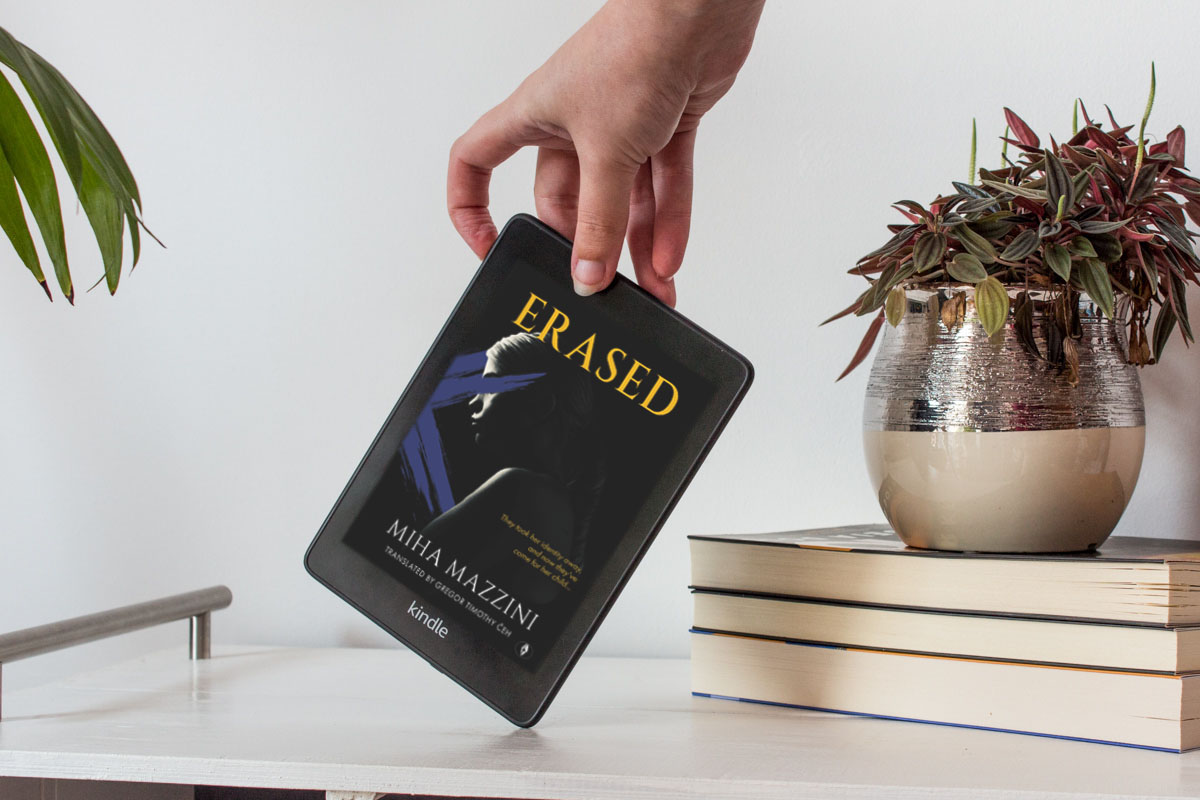
What would you do if your identity were suddenly erased? Set to publish on March 24th, Erased by Miha Mazinni shows the reader just that. A tale about how over 25,000 Slovene citizens were erased from their computer systems in 1992, leaving them all without an identity. Thank you to the publisher, Fly on the Wall Press, for an early copy of this book.
Title: Erased Author: Miha Mazinni Publication year: 2026 Length: 270 pages Genre: Historical, Political, Fiction Pace: Fast Story focus: Plot & Characters
Told in third person, the story follows Zala, a pregnant woman who is about to give birth. Everything during the pregnancy went normally, until her water broke and she rushed to the hospital, just to discover that her name didn’t exist in the computer database. What comes after is a succession of revelations, leaving her without an identity, like a foreigner, and her baby boy in danger.
Erased was a real eye-opener. Not in the sense of “OMG, how could this happen”, but instead as “be mindful of other people’s experiences, we never know when they need a hand”. I could go on saying that this was a reflection of the time. That 1992 was more than 30 years ago. Times have changed… But have they?
I was not expecting to discover that Portugal and Slovenia are apparently distant cousins. The way Miha portrays the random people on the street, born and raised Slovenes, you know, “real” Slovenes, and how they would interact with Zala, felt too familiar. I was reading words that I’ve heard being spoken out loud, not long ago. And that not only made me question more what exactly people are going through despite what public opinion says, but also started simmering the anger in the face of injustice.
The Erased are an example of the system being used to discriminate. It wasn’t an accident. It was intentional. It was about framing this new law a certain way for the people, not realising what it actually meant. For Zala, who has been living in Slovenia since she was a baby, the changes in the law for the new system only affect foreigners. But she didn’t consider herself a foreigner. In fact, she didn’t even know these changes were being made. The State expected her to apply for citizenship when she didn’t consider herself a foreigner, and they didn’t even go out of their way to notify her properly. To her and many more Slovenes, a foreigner is someone who comes from outside the country, not someone who has been living their whole lives, studying and working there. Not someone who has their family, friends, and a network of people established in that place.
Miha does a great job explaining what is happening politically in Slovenia and the territories adjacent, without giving a history lesson. Slovenia used to be part of Yugoslavia, an old country that no longer exists. It was formed during World War I, and by the end of World War II, it was a communist state. A couple of decades later, Yugoslavia was divided into six republics, one of them being Slovenia, and later that division became permanent with the fall of communism and rise of the democratic movement. And that’s when the story starts. With Slovenia’s recent independence, a new system for tracking citizenship digitally has been implemented. The problem is that everyone born outside of the now Slovenian territory is considered a foreigner, especially if they were born in the old Yugoslavia.

The discrimination becomes apparent as being motivated by political reasons. How the “real” Slovenes talk with Zala reinforces even more that fraction. It’s a us-versus-them mentality. Although the “them” consider themselves the “us”. But since that’s not an “us” problem, no one is willing to change anything. This division is actually even beneficial for some, so why change it? And it’s crazy to think that to this day, this problem is still unresolved. In fact, I didn’t even see any mention of any of this mixed up in the Slovenia Wikipedia page. That should be there under the history tab, shouldn’t it? (There’s a Wiki page about the Erased, but I didn’t find a link to it from the page about Slovenia.)
Miha Mazzini did a phenomenal job portraying the complexity of this problem. The emotional battle, the revolt, the need for action, the lack of support. Zala wanted to act but couldn’t. She had no support. Estranged from her family and keeping the father of the child a secret, it was she alone against the State. She was stripped of every little thing. Anything she took for granted suddenly was a threat to her. Not only does this story show how stripping someone of their legal identity affects their lives as a whole, but also how little you can do when you don’t have one. They can’t do anything. It’s not just about a document, but of a whole life that simply stops. That exists in a void.
In this case, the alternative for these people without citizenship was to return to the other territories, which they are also not citizens of, and that are at war. There was war happening around Slovenia, so the State was literally saying “go back ‘to where you come from’ and if you die in the middle of the conflict, that’s not my problem”. But how can you go back to a place where you don’t belong?
Zala encapsulates the experience of a lot of emigrants, despite not being one. Inside Slovenia, she’s not Slovene because of her name and birthplace. But outside of Slovenia, she is treated as a Slovene. These people end up feeling like they don’t belong anywhere. Don’t belong in the country that raised them because they are different, but also don’t belong elsewhere because they weren’t raised there. And this boils down to the people. This isn’t just a matter of States, governments or systems. It’s about the people and how they interact with others. Do it long enough, and it’s about culture.
However, this is a hopeful tale. It does have a happy ending, and I’m so glad it does. I don’t think I could deal with witnessing all this injustice and then having this book end there. The world is too much right now for fiction not give us some hope. And while this is a very specific story, the core messages are universal. It’s about making the reader think, question and see how systemic discrimination works, how policies and laws can be weaponised, how people benefit from faction, how it’s possible to remove power from people without them realising, and how important it is the way we relate to each other. They were erased because it was convenient, and you never know when your existence might become an inconvenience.