I just read one of the best books of my life. No words can truly express the magnitude and appreciation that I have for this piece of literature. I was curious to see how the story ends, and now that I have, my days are a bit empty. I want to go back to a time when I still had more chapters to read. Closing the book was like losing something. The end of a friendship before you are ready to part ways. I want it back in my life. I want it as part of my day-to-day again.
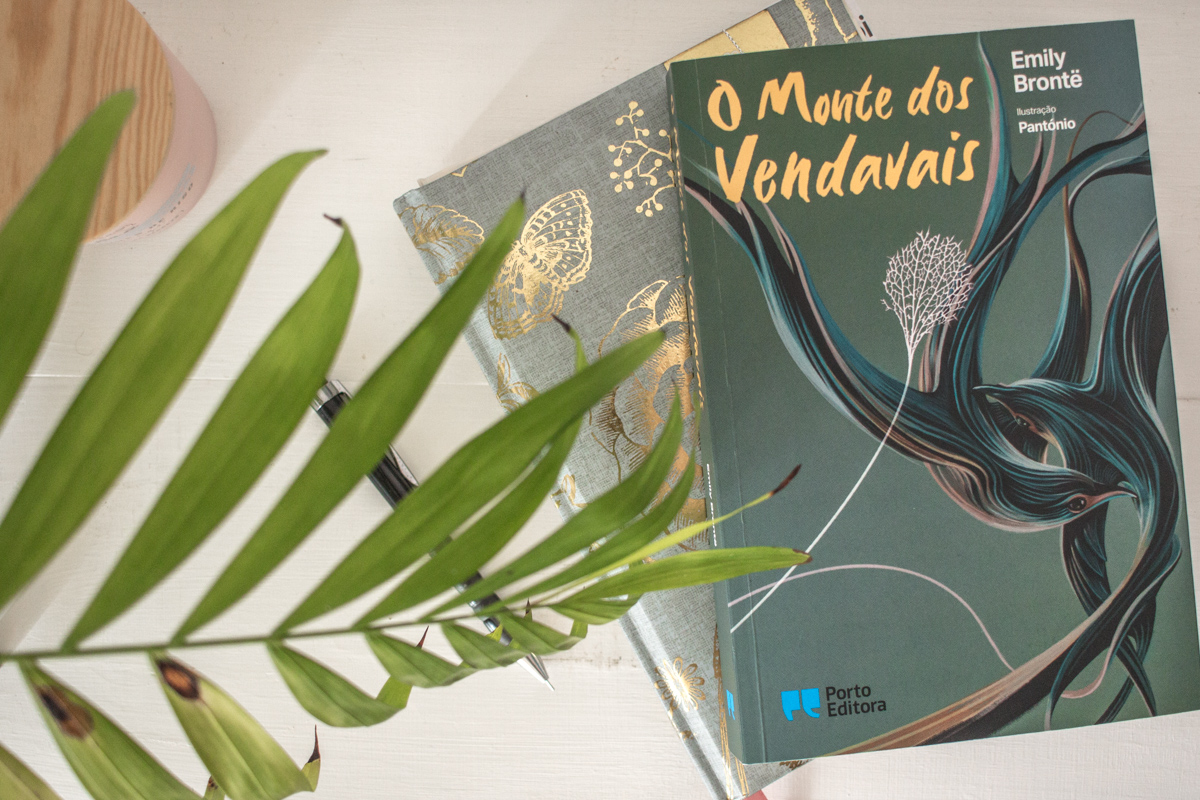
Title: Wuthering Heights Author: Emily Brontë Publication year: 1847 Length: 14 hours 15 minutes Genre: Gothic, Drama, Classic Pace: Slow Story focus: Character
Calling Wuthering Heights by Emily Brontë a classic is doing a disservice. We should find another way to classify classic literature. Putting them all in the same bag really sets the wrong expectations. Wuthering Heights is a soap opera set in the early 1800s, casting some of the worst kind of people that exist on this planet. It’s so dramatic. It’s amazing! I don’t hide my love for terrible fictional people. They are like a car crash. You can’t look away. It’s brilliant, actually. For the reader who needs likeable characters, I’m sorry to inform you, but this book has none.
It’s hard to avoid mentioning the new adaptation by Emerald Fennell since it was one of the motivations to read this book now. Halfway in, I had already decided that I wouldn’t watch the movie. I’m firmly against perpetuating the representation of abusive relationships as passion. And from everything that I’ve heard about the movie, it’s inspired by Wuthering Heights and not an adaptation, as they so vehemently try to sell it. But now, having finished the book, I still don’t want to watch this adaptation or any other, for that matter. Either romanticised or accurate. The magnitude and complexity of this story can’t be presented in any other way. So I’ll only get disappointed. It’s a better use of my time to simply reread the novel.
We can’t talk of Wuthering Heights without mentioning Heathcliff. Is he really the protagonist or antagonist of the story? It’s debatable. While his presence haunts the whole story, he isn’t present all that often. When he does, I have to confess, I started to fear for what could happen next. What he would do, how he would react. Having him present or close by was unsettling, and I think Brontë did a wonderful job constructing this feeling around his character. Although it didn’t end there. To me, Heathcliff is fascinating, the same way one can find it fascinating observing a praying mantis or a black widow (both notorious for murdering their partners after reproduction). I don’t agree with him, I don’t like him, but it’s fascinating to study and try to understand the mind. A very sick, twisted mind.

Not exactly a realistic character, Heathcliff is a device. He’s used by the author to make the theme of the book very clear. He’s the only character that voices very clearly the abuse he’s going to exert, the consequences it’s going to have, and his ultimate motive. He doesn’t leave room to interpret things a different way. He’s clear like water. This could be interpreted as the author spoonfeeding the reader instead of trusting the reader is smart enough to understand what is going on. Although I believe Brontë wanted to be sure that there was no room to think about Heathcliff in any other way (I guess Hollywood said “nope bitch” anyway). He acts almost as the personification of generational trauma.
What distinguishes Heathcliff from other characters is the bluntness. We don’t know about all the abuse Heathcliff was a victim of because no one bothered to see or speak of it. He is not the only one perpetrating generational trauma, but since it’s not put in black and white, it’s as if it doesn’t exist. Also, one of the reasons why generational trauma is a repeating cycle. Do you see how cleverly crafted this story was? Emily Brontë was a very intelligent woman. I have no doubt.
We shouldn’t diagnose people with mental illnesses. But since these are fictional characters, I don’t see any harm in doing that. And I want to mention this because I saw a lot of narcissistic behaviour in Heathcliff. He could be a narcissist, a sociopath or even a psychopath. Although the latter might not fit as well since it’s connected to biology rather than the environment. Either way, he displays grandiose behaviour, resentment, a fight over control, manipulation, lack of remorse, lack of empathy, lack of respect, and lack of emotional control. Understanding the complexity and twistedness of a narcissist is something that has to be learned. The manipulation level is so high that it has to be tracked in the smallest things sometimes. In this case, Heathcliff often puts the manipulation aside and is honest with Nelly, the narrator, so it’s very clear what he is doing. Again, so there isn’t room to interpret things a different way. But Nelly is the only one who knows the truth, for everyone else, he’s just a closed-off person with an iron fist.
Then there is Catherine Earnsaw, later Catherine Linton, or Cathy for short. The other big character in Wuthering Heights, who only exists for half of the novel. Cathy seems to have borderline personality disorder. Characterised by impulsiveness, emotional instability, fear of being rejected or abandoned, anger, and even feelings of emptiness. And we see it in every relationship she has, even with Heathcliff, whom she loves so much. Even when they are together, she isn’t happy. They fight, they clash, they hurt each other intentionally. This is not passion, this isn’t love. This is sickness. They are two highly unstable and ill people who need real help. They developed an obsession with each other that could stem from their illnesses since they are heavy on the idea that they are the same soul in two bodies (sounds familiar, Cersei and Jaime Lannister?). As if they can recognise each other’s “brokenness” in the other person. Like looking in a mirror.

At some point, Heathcliff mentions something that to me reflects the dynamic he, Cathy and Hindley (Cathy’s older brother) had as children growing up together: “The tyrant grinds down his slaves, and they don’t turn against him; they crush those beneath them.” (chapter XI). Hindley is the tyrant, and Cathy somewhat his slave, and the only other person beneath her is Heathcliff, whom she has “treated infernally”. There’s clearly a hierarchy of abuse built between them caused by their environment (the father’s strange care for this dark-skinned boy, their mother’s disgust for said boy, and racism from the time period). Heathcliff would receive constant abuse from all the people around him, especially when their father died. For me, this is a very important point to understand the relationship between Cathy and Heathcliff. That’s why I say they hurt each other even when they are together. They don’t know how to exist in any other way.
Then we have Nelly, our narrator. She grew up with Cathy and Heathcliff despite being part of the help. She clearly has favourites, which makes her a biased narrator and not just an innocent bystander. She makes decisions and takes actions that affect other characters that are never called out. After all, she’s the one telling the story. So, in her viewpoint, she’s just an innocent little lamb doing her job while everything else is happening around her. But we can see that things aren’t actually like that. And demonstrating through Nelly’s actions, but not directly pointing out, like with Heathcliff’s, shows the abuse being normalised and accepted by society. If Heathcliff is the personification of generational trauma, then Nelly personifies society.
There’s so much to talk about in this book. And people have done it and still do, to this day. I could go on exploring deeply Heathcliff’s psyche, how Heathcliff affects other characters, how Brontë constructed Heathcliff, the impact Nelly has in the story, how other characters don’t react to the abuse when they see it, how the abuse is normalised, how it passes down from generation to generation, Heathcliff and Cathy’s obsession with each other, how they go from growing together as siblings to lovers… This is where the complexity of the novel comes into play. There are so many thoughts that can be explored through this story. And I can even question the story itself. What if none of it is as presented? I mean, Nelly is a biased narrator, but what if she is more than that? What if she’s unreliable? She doesn’t like Heathcliff. What if she paints him in a way that makes you believe he’s this monstrous thing? I can spend hours talking about what exists in the novel and what is glossed over, but I can also take a completely different approach.
I like stories about terrible people because I get to see their thoughts, the manipulations, their feelings, their actions and reflect on them. And this book gave me that. I could even reflect on the actions of characters that weren’t seen as a problem, like when Nelly disliked a character, she didn’t care if they suffered or not. To her, they were bad people, so they deserved the harm coming their way. In our society, there’s still this idea. Although in the story, I could see they weren’t all bad, and they didn’t deserve to suffer. But Nelly remained as the response of the society then (and sadly, now). This is something never highlighted, but that I saw when reading. And if I read the book again, I would find many more that I missed. This ability to return to a text and find different things, focusing on other points, is what makes me head over heels in love with Wuthering Heights. I could write as many more words as these ones, which I have, and still feel like there was so much more to talk about.
Goodreads | The Storygraph | Literal | Fable