Some readers will unapologetically put down any book they are not that interested in. Meanwhile, others have to finish all the books they ever started. I think I stand somewhere in the middle. I’ve closed books vowing to never open them again, while also finishing some that I shouldn’t have wasted my time with. But what I started to realise was the various reasons I gave myself to DNF a book.
Online book communities tend to use a lot of acronyms, and for newcomers it’s normal not be sure what some of these words mean. In case you don’t know, DNF stands for Did Not Finish. It can also be expanded to Soft DNF and Hard DNF. People usually use Soft DNF for books they aren’t finishing right now, but want to come back to them later. Maybe life got busy. Maybe the story requires a certain headspace. There are various reasons why a book can be soft DNFed, but when these words are used, it usually signifies the reader hasn’t given up on the book yet. Meanwhile, a Hard DNF is for those books that the reader doesn’t want to continue. Ever.
These are obviously just words some people might use. Not every DNF are soft or hard, and some DNFs (speaking for myself here) aren’t even considered like that. These terms are a way to organise the books in someone’s mental space. It’s a way to tell yourself which books you don’t want to ever touch again and which ones to give a second chance. And when other people use the same terms, it becomes a way to quickly tell how they felt about it.
Although I want to expand on the DNF category because, like many other things, I feel it’s more of a spectrum than an either/or situation. And if you are one of those people who simply can’t leave a book unfinished and you wish to change that, I hope all the various reasons I’ve used over the years to let books unfinished can inspire you to let go.

The DNF because I really didn’t like the book
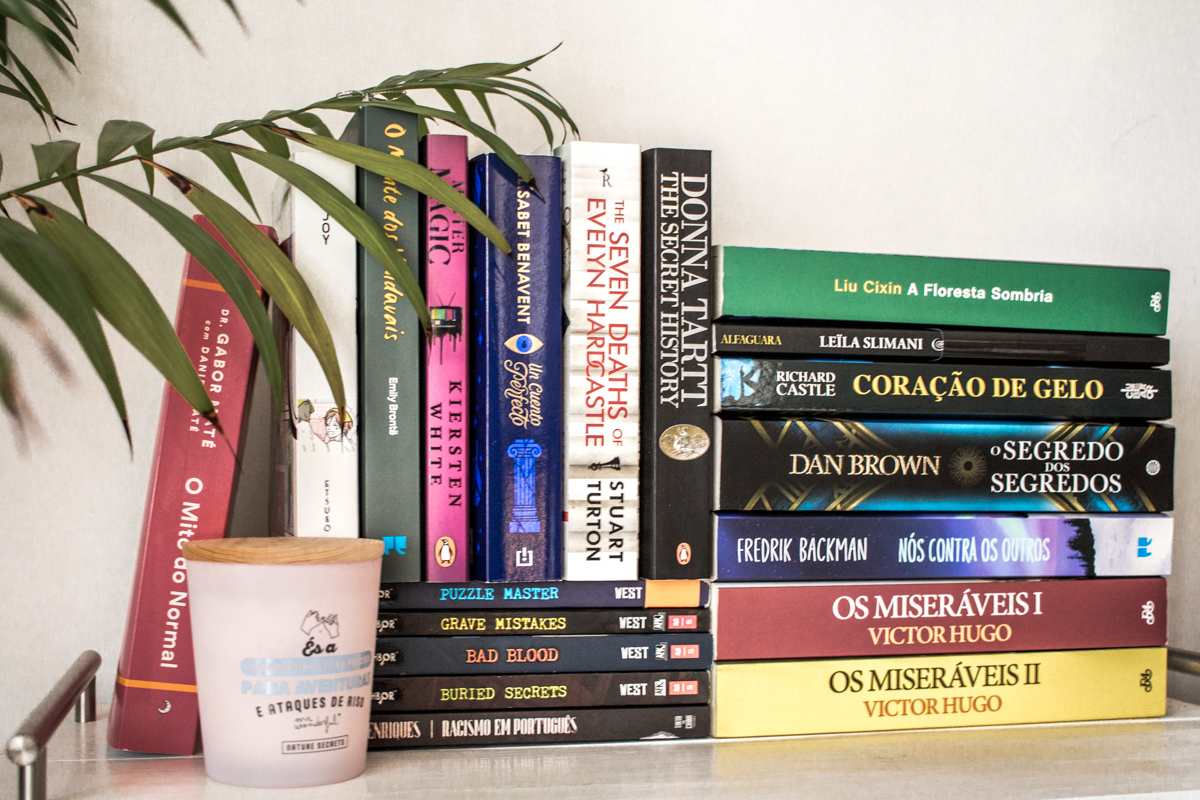
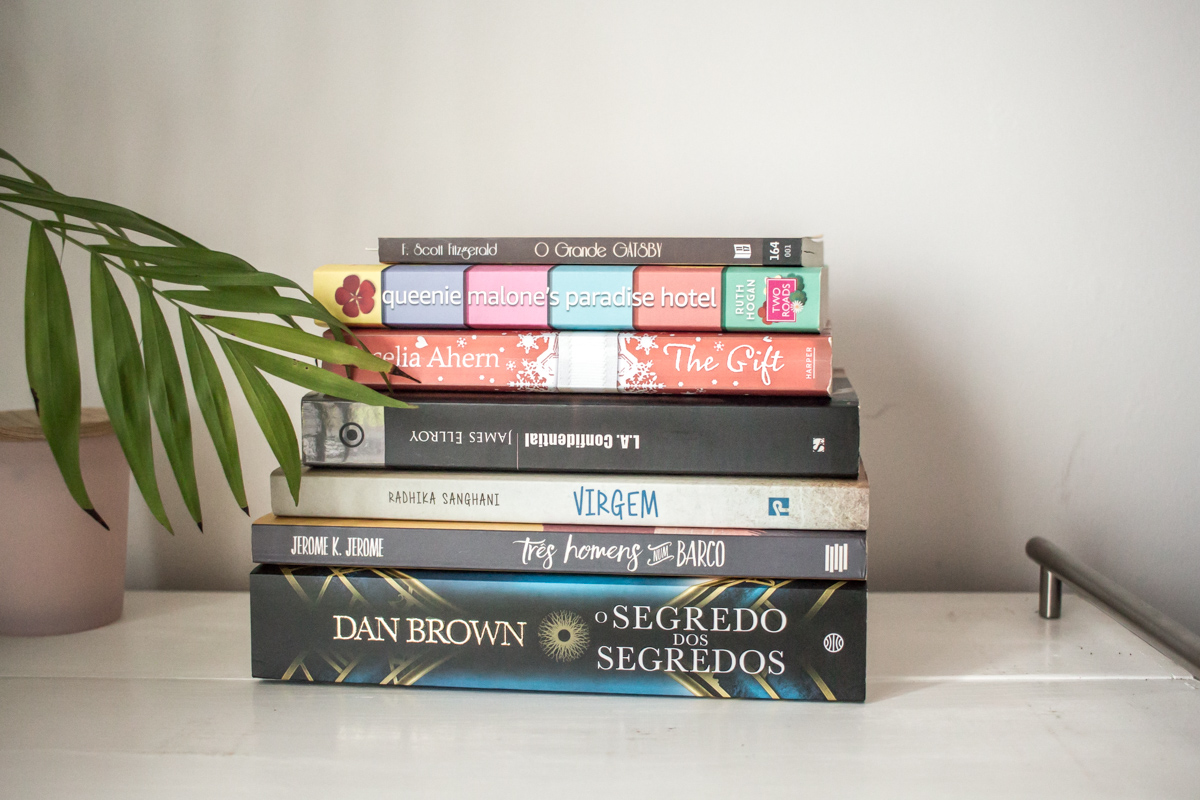
This is the most basic DNF type of them all. I didn’t finish it because I didn’t like it. Virgin by Radhika Sanghani is a prime example of that. In this entire blog, Virgin is probably my only negative review. I even threw this book across the room at some point. When I say I didn’t like it, it’s an understatement. I didn’t like it with a passion. The main character’s (MC) ideas were just dumb instead of creating a sex-positive conversation that I was expecting. I did flip to the final chapter to read it, in the hopes the MC would have a change of heart, but no. She learned nothing. And in all her stupidity, I didn’t find any of it funny, so I was just progressively getting angrier. DNFed it at 54%, and I wish I had done it sooner.
Meanwhile, The Murder on the Interstellar Express by Gregory D. Little was a book that started on the wrong foot. It’s a third-person narration following a female MC. The protagonist is sexualised a lot, and it rubbed me the wrong way because of the narration. If it were first person, I don’t think it would matter as much. I read until the 20% mark and put it down, to never think of it again. Nothing that could happen in that book would ever change my opinion on it. I was displeased, angry, and annoyed, and those emotions would only continue to carry and aggravate throughout the book. Finishing it wouldn’t change my opinion on how the MC was being treated. So why continue?
I’ve simply lost my interest
There are books that I’ve lost interest in due to the pace at which I’ve read them. But I still finish them even if there’s like a month or two break between readings – I’m looking at you, Leviathan Wakes. But there were others I decided to let go. Most recently, Secret of Secrets by Dan Brown. Usually, for these books, it falls into a simple question: do I want to spend X amount of hours to finish this book? If that answer is no or the thought leaves me depressed, it’s a clear sign to put it down. Reading against your will will only make you hate the book even more. Think of all the ones you had to read for school. Forcing yourself to finish a book that you have lost interest in won’t make the rating any better. Quite the opposite. So it’s time to let go.
The Secret of Secrets, I left at 61%, and Where Secrets Lie by Eva B. Gibson, I stopped reading at 69%. As you can see, I dove deep into the story. I knew what it was about. I knew the characters. And yet, for whatever reason, I stopped enjoying my reading time. With Where Secrets Lie, there’s a dual timeline I really liked. But it was taking so long to unveil the secrets. And the plot in the present timeline took a grim turn, so I couldn’t see the story giving me a satisfying end. So I put it down. My curiosity wasn’t stronger than my willpower. The only thing I regret is not jumping to the final chapters to uncover what secrets they were hiding.

And then there was Queenie Malone’s Paradise Hotel by Ruth Hogan. I was reading everything that woman was writing. If you love dogs, then you are going to like her books. I felt conflicted to put this book down. I considered her an author that I like, a favourite even. But how could I say that if there’s a book of hers that I don’t enjoy enough to finish? In this book, there was even a plot line I wanted her to do in her other books, and now that I had it, I wasn’t enjoying the book. At 55%, I decided to put it down. I really wasn’t connecting with the MC. There was no point in continuing. I flipped some pages and skimmed to see where the story was going. It was progressing exactly how I expected, but it wasn’t enough to interest me back into finishing it.
This is not what I expected to read
There are also books that “trick” you into expecting to read something, and instead, you get something else. This could be the fault of the marketing, the reader or, in this case, the film. I’m talking about Julie & Julia by Julie Powell and The Great Gatsby by F. Scott Fitzgerald. When you watch a movie based on a book and go in expecting to read the same things, more often than not, you get disappointed. Although I would consider The Great Gatsby a soft DNF. I’m not outright cutting it off. The story just takes longer to develop than I was expecting, and I had no patience to wait for it. Both of these books were DNFed at 20%.
I’ve taken from the book everything I wanted
This is one of my unique reasons to DNF a book. Three Men in a Boat by Jerome K. Jerome is a quite humorous adventure of three friends rowing a boat upstream on an English river. This book made me laugh out loud a few times. But at 70%, the story was progressively getting more dull, focusing on British history as the trio reached certain places in their journey. Because the journey is only a small part of the story, the rest of the pages are filled with tangents the author takes. So I put it down. I had a great laugh with it, I enjoyed it. From now on, it would only be the same thing over and over again until they reached the end. I would actually recommend this book. It’s a very funny and relatable journey despite being more than 100 years old.

Not every book left unfinished is a bad book
This is probably one of the strangest DNF types I could have. I’ve DNFed books that I liked. Seems contradictory, I know. In these cases, there’s something in the story that makes me decide to stop reading. Something not very positive, but that doesn’t take away from my positive opinion on the book. L.A. Confidential by James Ellroy was one of those cases. I even rated it on Goodreads despite DNFing it (which I usually don’t do). I was enjoying the book. Despite all the racism, police brutality and bad language, I was enjoying the story. I stopped reading at 70% because I felt the story was repeating itself too much, and I didn’t care who committed the crime anymore. I didn’t see anything that could happen later on that would make me enjoy the book more than I already did. It was a 3-star read, and I didn’t see that changing. So if I didn’t want to reach the end, I wasn’t going to reach the end.
On the other hand, The Gift by Cecelia Ahern was quite a different story. I liked her writing. I was surprised by it. It’s quite cheerful when I expected something more melodramatic. That was something very positive. But the MC and the plot of the story were something that I simply didn’t want to read. It was a redemption arc of a very specific type of character that reminded me of someone I know in real life. And I didn’t want to read about giving a second chance. But this is a very personal reason. There’s nothing wrong with the book, quite the contrary. So I put it down, knowing full well I was not reading it because I was not in the right mental state to appreciate the story.
In conclusion
There can be so many reasons not to finish a book. And they can be the craziest ones. You can even decide to quit a book at 90%. As a reader, it is your right to do whatever you want with your book. I would never read the last page of a book before starting it, but some people do. To me, they are crazy. But I also say I like a book when I didn’t even finish it. I guess we are all crazy. Each one in their own way.

A few years ago, I wanted to try and test if 20% was a good baseline for DNF books. But who am I to tell you that if a book doesn’t grab your attention by page 50 in 800, you can’t DNF it? In some books, by the first chapter, you can tell the story might not be for you. And there are only reasons that you don’t owe anyone. It’s your book. Your time. Your hobby. You do with it whatever you want. You don’t owe anyone anything. Not finishing a book doesn’t make you less of a reader. And all the time you already spent reading that book isn’t wasted time. It was a time used to get to know a character, a story, an author…But continuing when you already know everything you wanted from that book, now that is a waste of time. Time that you could use to read your favourite book of the year.
I wish I had some tricks for the completionists who want to learn to let go. When I’m debating whether to DNF a book, I simply have a little argument with myself. But at some point, I’m always dreading more the thought of continuing to read, of imagining myself having to sit down and force myself to read, of hating every single minute I need to go through to finish the book. I sometimes use a reading tracker app that tells me the pace at which I’m reading and how many more hours I need to read at that pace to finish the book (the ereaders usually have the same feature). So I envision myself how many days it will take me to read all those hours. That is usually enough to bring out that dread feeling. To know how many more days I have to “suffer” to mark it as read. And for what? Why do I need to finish the book?
So, I hope 2026 is the year of DNFing, not because we are reading bad books, but to take back our time. To prove nothing to no one. If the book is no longer serving its purpose, then put it away. No regrets. Because even if you have them, no one is stopping you from grabbing the book again and giving it another try. Don’t stress yourself out with something fun and find yourself some crazy reasons to DNF a book.