In 2025, I finished reading the last book in the Robert Langdon series by Dan Brown. And to celebrate, a few weeks later, the author announced the next book in the series ( I should really finish A Song of Ice and Fire to see if George R. R. Martin does the same). I was very excited to have a new book to read. And then it was announced that a female character was returning. This is a first. Robert Langdon’s female sidekicks are always new characters. Basically, the whole cast is always new from book to book, making them perfect to start at any point. While this news was exciting, what I didn’t like was discovering the character in question was Katherine Solomon. Previous co-star in The Lost Symbol, AKA the book I disliked the most in the series.
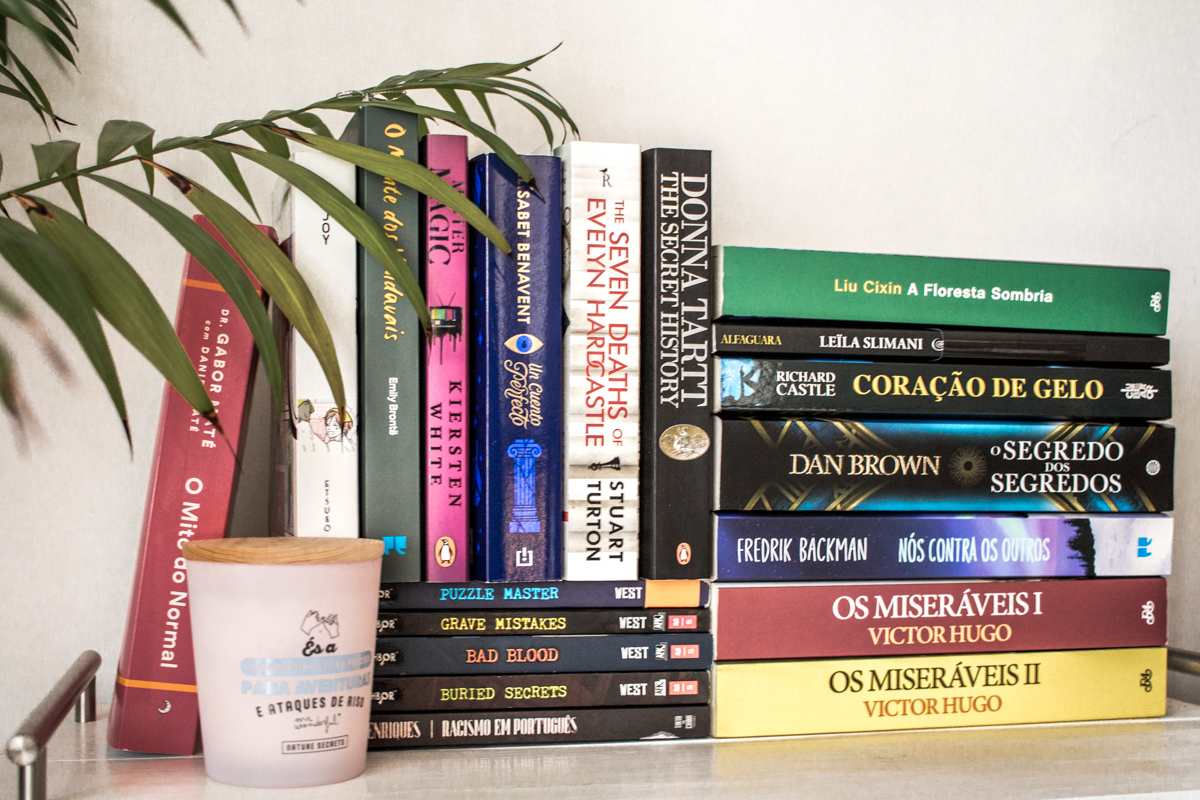
Title: The Secret of Secrets Author: Dan Brown Series: Robert Langdon #6 Publication year: 2025 Length: 22 hours 50 minutes Genre: Mystery, Thriller Pace: Medium Story focus: Plot
This was not setting a good precedent. But I was still excited. I wanted to know what the secret was. I jumped in, not knowing anything at all. I’ve read 5 books in this series already, and I know where I’m getting myself into. I know Dan Brown’s formula. I like it and expect it. And now it’s 2026, and I’ve decided not to finish this book.
I’m choosing myself and my peace of mind over stubbornness to finish a book. Also, no one can stop me from jumping to the end to get some answers and be done with it. I’m on page 430 of 694, more than halfway, and I’m not enjoying it. I’m choosing to put it down now. It doesn’t mean I won’t try reading it in the future, though. For now, the secret will remain a secret.
On a positive note, I have the solution to make this book and The Lost Symbol more to my liking. Not that it will change anything, but it’s a new perspective on the matter. With The Lost Symbol, I wrote in my review that I felt the character of Robert to be lost. He stops being in charge of the story, and instead, it’s Katherine who takes the lead. The same thing happens with The Secret of Secrets.

In this new book, Robert is in a romantic relationship with Katherine. A completely new side of him. He actually even took a vow of celibacy (mentioned in Angels and Demons, if I’m not mistaken), so you can see how different this is for his character. It takes a bit to get used to this new side of him. As I mentioned earlier, I expect a formula, a consistency every time I open a Robert Langdon book. And this is straight off the bat, a change. There are more changes, but I’ll get to them later.
Meanwhile, Katherine is the star of the show. It’s her book that is being targeted for some reason. It’s her research. It’s her work that takes both of them to Prague. It’s what she discovered. If you haven’t read The Lost Symbol, Katherine’s work is about the soul and the mind. Things science still can’t explain, but data suggests it exists somehow. In The Secret of Secrets, the focus is on noetic science, a pseudoscience about using scientific resources to study subjective experiences, consciousness, and human intelligence. This is far from Robert’s field of expertise. And since he is the protagonist, there’s a problem here.
That’s where my solution comes into place. Robert shouldn’t even be part of this story. Both The Secret of Secrets and The Lost Symbol should have been books in another series starring Katherine Solomon. Completely independent from Robert Langdon or a companion series if the author didn’t want to sever that connection. Robert could appear as a secondary character, but the one in the lead would be Katherine. It would be her knowledge guiding the story, just as it happens in both of these books. Just as Robert’s knowledge guides The Da Vinci Code. That’s why it’s amazing to follow him. His expertise in symbology, history, and secret organisations makes the mystery so much fun to uncover. And I think Katherine has the same ability, but she needs to be the one driving, not sitting in the passenger seat giving orders. Because if that were the case, then I would also change my expectations going into these books.

When I open a Robert Langdon, I expect history, symbols, and more of what makes The Da Vinci Code and Angels and Demons so much fun to read. So keeping these books as part of the Robert Langdon series creates a problem. The books aren’t about that at all. Robert isn’t even the expert in the matter, quite the opposite. Some of the stuff goes over his head, just as it does for the reader. So why am I following him? Solving a mystery with Robert is like taking a class while you uncover bits here and there. And that is fun. So if the subject matter changes, why am I not changing professors?
From the 430 pages I read, there isn’t any mention of what happened in The Lost Symbol. It’s normal for the books in the series not connect with each other. After all, the cast is always different. The mysteries, history, and secret organisations are always different. Until this book, there wasn’t a reason to connect them. But there isn’t a single mention. In fact, I felt quite the opposite. At some point, Robert says he never had a near-death experience, but I’m pretty sure he nearly died in The Lost Symbol. Not to mention, the reason why he hates confined spaces. His claustrophobia is quite recurrent in every book and is also explained to be tied to a near-death experience. And it’s strange to bring a character for a second time and yet ignore everything that happened before.
Apart from Robert being now a stud, apparently, he’s also MacGyver. What helps Robert escape countless times is his knowledge, his brain, not his craftiness. I actually think he would be quite a clumsy person. So seeing him outsmart the bad guys by engineering a distraction was a facet of him I didn’t expect to find. This ties in with the criticisms I have for The Lost Symbol. I don’t recognise the character. Robert Langdon is once again dismantled, picked apart. And I don’t like this version of him.

For any new readers, I don’t see this being a big problem. The book maintains the formula with small chapters, chapter cliffhangers, different points of view, jumping from sciency talk to action, and uncovering the mystery slowly. Despite being about a topic that can be complicated to understand, it is readable, like any Robert Langdon book. This time, there are more POVs than usual, which, to me, only made me detach even more from Robert. But it can be beneficial for the complexity of the mystery web.
I’ve simply reached a point where continuing to read The Secret of Secrets is a chore. It’s a labour to sit down and read. So why continue? I don’t have to prove anything. I read the other five. And Robert Langdon needs a retirement plan, not another mystery to solve. I love you, Robert, but I prefer to continue not knowing the secret.
Goodreads | The Storygraph | Literal | Fable