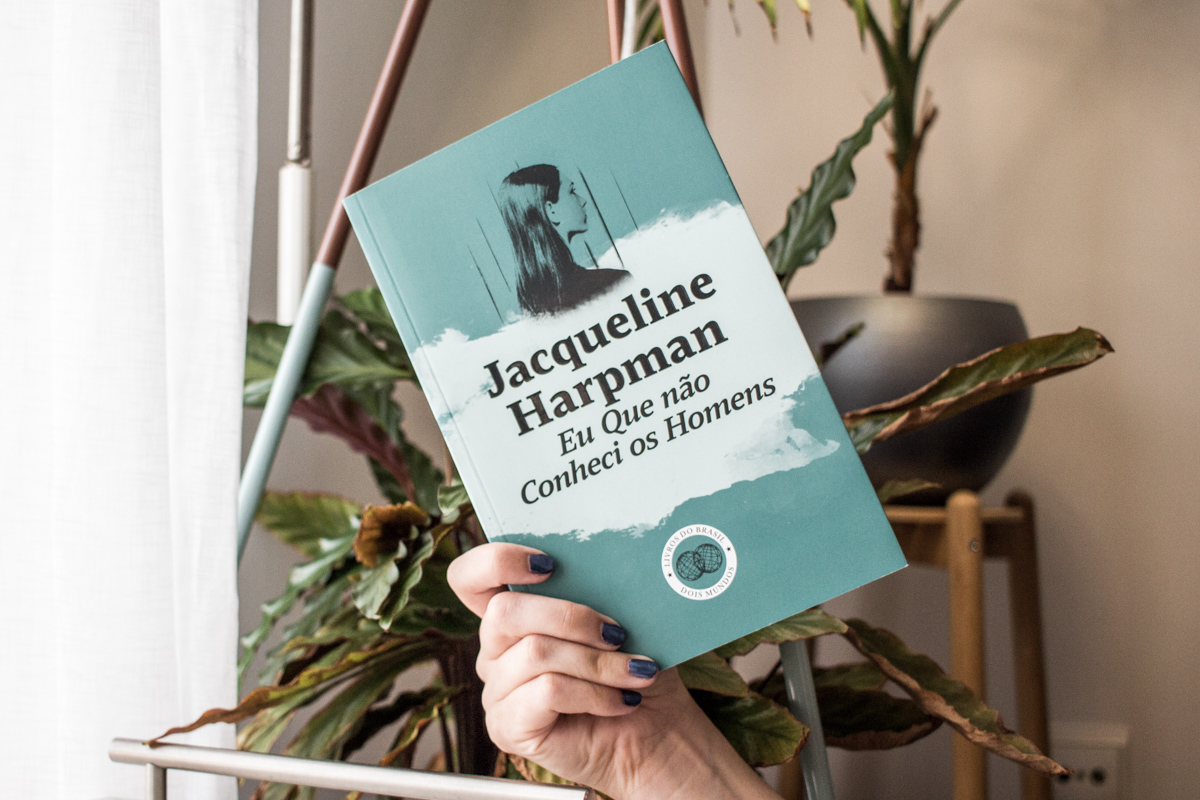
For the longest time, I’ve heard great reviews of I Who Have Never Known Men by Jacqueline Harpman. My curiosity grew with each new person I saw talking about this book. Despite that, I knew next to nothing about it. Only what the title implies. And even that was very misleading.
Note: While searching more about the books Harpman published and which ones were translated, I discovered the first English translation in the UK was titled Mistress of Silence, and only when it was published in the US did it receive the title we now know. So if you find a Mistress of Silence by Jacqueline Harpman in the wild, know that it’s the same book as I Who Have Never Known Men.
Title: I Who Have Never Known Men Author: Jacqueline Harpman Publication year: 1995 Length: 6 hours 46 minutes Genre: Literary Fiction, Speculative Fiction, Sci-fi Pace: Slow Story focus: Character
Our nameless protagonist lives in a basement locked away with 39 other women. None of them remembers how they got there or why they even are there. They are guarded by men who never say a single word, only the crack of a whip. They don’t know how long they have been living there. They speculate it has been years since our protagonist was a small child when they were put in there, and now, she’s all grown up.
There are books we love because they excite us. They are fun, new, imaginative. They make the brain delight in dopamine. But there are others that deplete us. Once the last page is turned, the back cover closed, the only thing left is a husk of who we were. We close the book and stare into nothing. There’s no feeling, no emotion, no thought. Only a before and an after. Nothing you can say or do. Just existing depleted of what makes you you. Like a light that has been turned off in the moment the book was closed.
Our mind and soul stayed behind, holding on to that final period. Hoping that magically more words will appear and the story will continue. Not many books have the capacity to leave someone speechless and empty. That’s when I know I’m in the presence of a great book. When part of me is still trapped inside those now closed pages. When I don’t know how my day will go on knowing there isn’t more story to read. That it’s over. That’s when I know I’ve read something great.
If genres could be defined by a single book, speculative fiction would be defined by I Who Have Never Known Men. There is no better way to describe what this masterpiece is. Harpman begins with a simple premise: what would it be like for a woman to grow up locked up and to never interact with a man? And from it, she derives an existential crisis.

The start of the story, as well as the title, made me think this would be a feminist book about violence against women. I was very wrong. The protagonist of the story and all the characters she interacts with are women. So there is an intrinsic feminist side to the story, but it would be wrong to simply diminish it to that. At its core, this book is humanist. It’s a reflection of our lives, of ourselves. It shows how stripping away some basic needs has an impact greater than we can imagine.
The book isn’t about the protagonist not knowing any men. She actually has seen men before. The guards are men, but she never heard a single word coming out of their mouths. She doesn’t even know what a man sounds like. So she has seen them, but knowing them? She actually never did. However, the title is more about the irony of the ending than anything else. Once we get to know how these women live, the story changes and shatters everything we’ve learned up until that point. Now it’s not just about these women or any other women. It goes beyond.
We never fully grasp the world they are living in. And that’s also part of the reflection. To live in the uncertainty. To live with the questions and never get the answers. We usually don’t like that. It creates a lack of control and purpose, which quickly tumbles into an existential crisis. The book also reflects on knowledge, writing and books. Since the protagonist is telling this story herself, she highlights how stories are important both ways. For those who read them, but for the author who keeps existing while their books are being read. When much else doesn’t exist, being remembered might be the only thing left we can hold on to. And I’m glad this character author now exists in one more person: me.
The protagonist might not be for everyone’s taste. I wouldn’t describe her as a likeable character. Her story begins in her late teens/young adult years, and she feels revolted, annoyed, impatient, and even a little childish at times. That mellows out as she grows older, but that young energy to want to conquer the world never fully goes away. However, as we spend more time with her, we see her perspective. We understand where her feelings are coming from. And I couldn’t avoid empathising with her and liking her.

As readers, we always bring a unique perspective into every book we read. We make connections others haven’t thought about before. And one I did was with Blindness by José Saramago. Coincidentally, both books were published in 1995, and both deal with the implications of stripping people of their needs. Although Blindness is much more violent, in I Who Have Never Known Men, that violence is just perceived. We don’t know why these women are locked up or what the intentions of the people who keep them in captivity are. So the violence comes from their perspective and how they feel. By contrast, in Blindness, the violence is intentional. It highlights the worst in humans even during hard times. But perhaps why I connected both books was their humanity. In two very different scenarios, they spend a lot of time reflecting on people’s actions and reactions and what makes us human in the face of extreme adversity. If you’ve read I Who Have Never Known Men, I think you should check out Blindness.
After reading Wuthering Heights, I never thought I would read another book that could challenge its place as the best book I read this year. I was wrong, again. I Who Have Never Known Men is a good contender for that title as well. Like all the reviews I saw raving about this book, I hope I also did a good job of convincing you to at least think about giving it a chance. Because, after all, it’s a journey worth taking.
Goodreads | The Storygraph | Literal | Fable