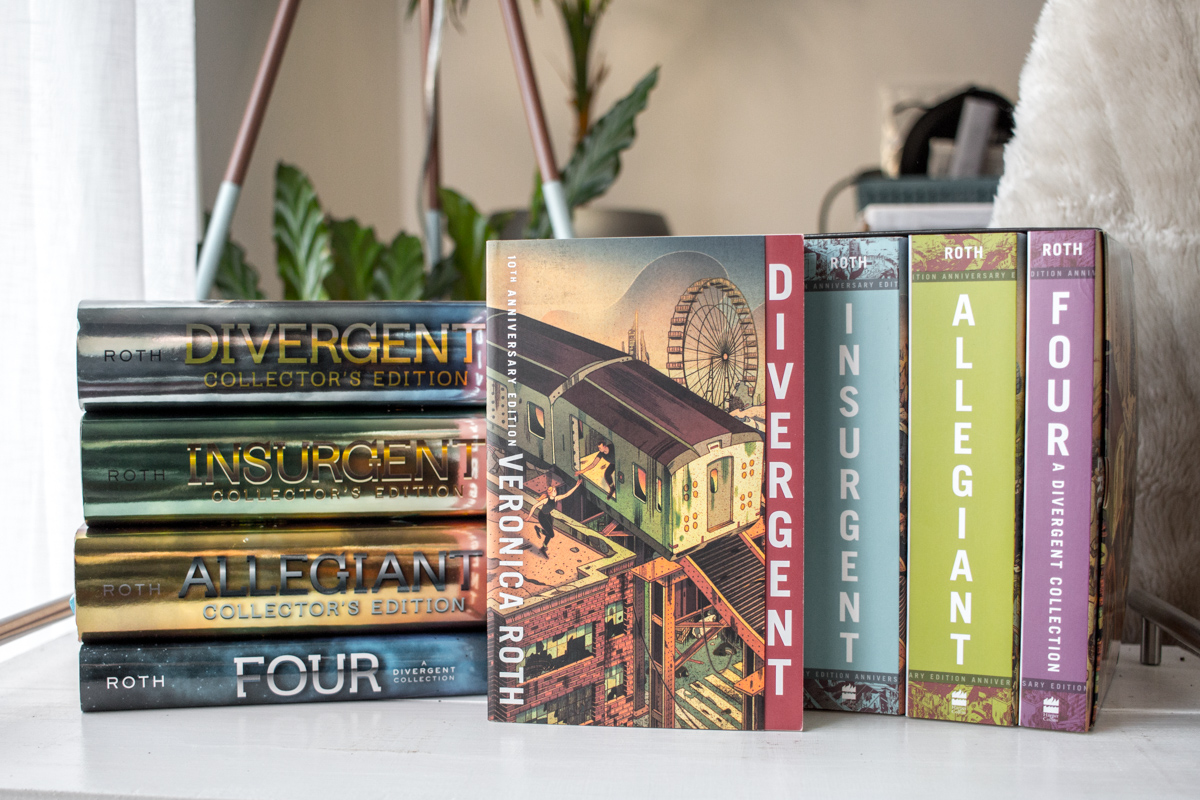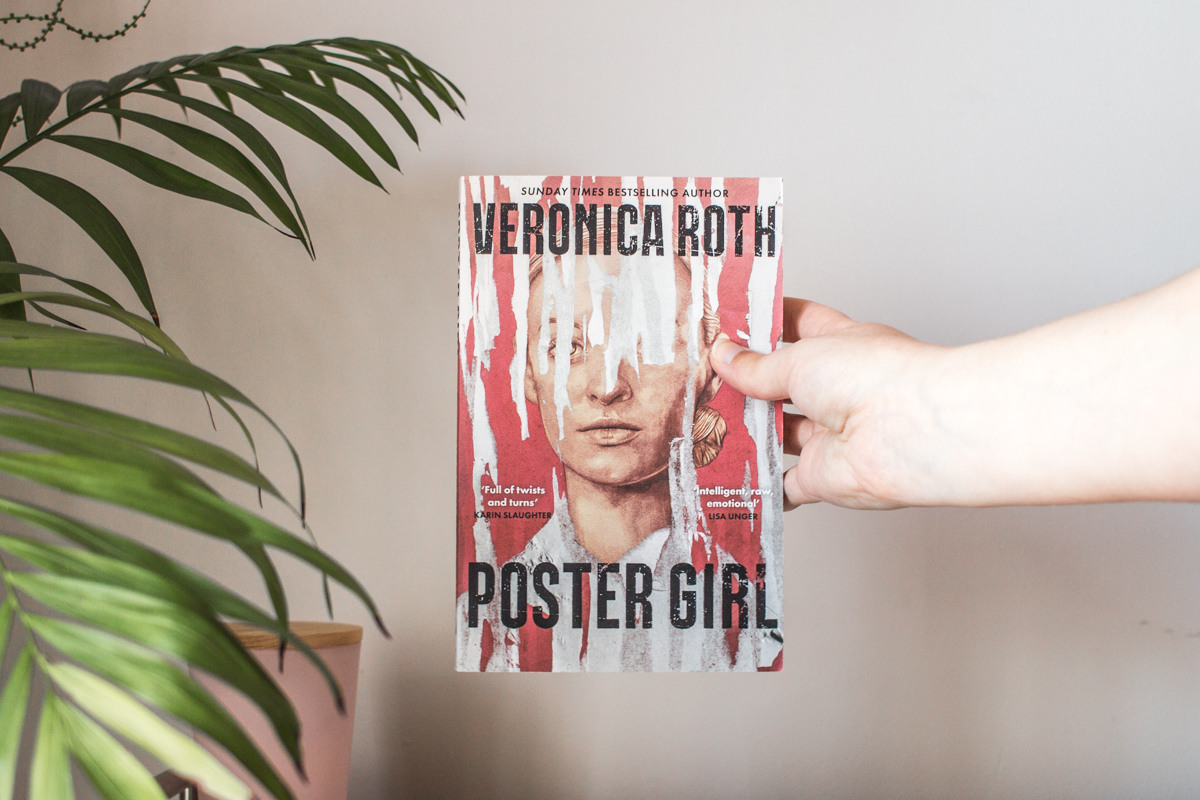
From the author of Divergent comes another dystopian story. Not quite like the others, Poster Girl presents a quest for justice while never changing the world. Ever since I first opened the pages of Divergent, it has had a special place in my heart. It was my very first book series and my introduction to dystopian fiction. A subgenre of sci-fi that I enjoy a lot and should seriously read more of. Since then, Veronica Roth has released multiple books, mostly falling into the fantasy genre. So when she got back to sci-fi, I knew I wanted to read it. I didn’t care about the plot as long as it was sci-fi. I trusted Roth would deliver something I would like. And I wasn’t wrong.
Title: Poster Girl Author: Veronica Roth Publication year: 2022 Length: 10 hours 43 minutes Genre: Mystery, Dystopian, Sci-fi Pace: Slow Story focus: Character
Sonya is the Poster Girl. A propaganda campaign from a decade ago needed a face, and Sonya, a teen at the time, gave hers. This meant that everyone knew who she was. And now, she’s the living remainder of the dead regime. Sonya is one of the Children of the Delegation, people born during the short-lived regime of the Delegation. Ten years since the fall of it, she has been kept a prisoner, like many supporters of the old regime. Although an opportunity to win her freedom presents itself. And with it also comes a journey of self-growth. The world outside the Aperture, the prison, is very different. And while Sonya wants to detach from the past, it’s there she’ll find the secrets the Delegation and her family have been keeping safe all this time.
Poster Girl is adult fiction. Something that caught me a little off guard since I’m so used to reading YA fiction from Veronica Roth. The story keeps a very approachable language while being more serious. It’s told in third person, which leaves a lot of room for the reader. You see, while this is dystopian fiction, it’s not about fixing the world. The previous, more oppressive regime fell a decade ago, and the one that took its place seems to be better. At least that’s the opinion of everyone not being incarcerated by the current government. Sonya could possibly disagree.

The world is presented slowly through the characters. It takes a while to understand the world Sonya lived in and the one that she lives in right now. It’s a story that demands patience and attention from the reader in that regard. About 80% of the novel focus on developing the characters and the world. And when you feel like you have a solid grasp of it all, that’s when the plot twists appear and start to develop quickly. Although for a long time the reader has to sit there not fully understanding everything, only trusting that, with time, it will all make sense. And in the last few chapters, twists and turns are appearing constantly. Secrets are spilling out everywhere. And it all culminates in a bittersweet ending.
The book never forces to define what’s right and what’s wrong. What’s good and what’s bad. The characters aren’t good or bad. There are no villains or heroes. Nothing in the story is black or white. And in the ambiguity, there is room for reflection. There are perspectives from both sides, and the objective is to think about them, not to decide who’s right or who’s wrong. Mostly because two things can be true at once.
The book deals with some pretty dark topics. It doesn’t delve into gore but explores heavy stuff, like child deaths, suicide, and substance abuse. Death is very present since the early pages. The fall of the previous regime led to some deaths that are carried by the living relatives. Sonya is one of them, having lost her family and friends. Because she’s all alone in the Aperture, she gets closer to other prisoners who have also lost their families and loved ones. And with not much else to do there, reminiscing happens often, which brings back all that pain.

What I liked most about this novel is that it showed what happens to a person when they are conditioned as children. Sonya was born inside the Delegation. Since she was a baby, she was taught how to think and how to act by the values and objectives of the old regime. Old habits are hard to beat, but those being taught from birth are even worse to shed. Sonya takes the whole book to lose some of those habits from a regime that no longer exists for 10 years. However, for 17 years of her life, it was her reality and everything she ever knew.
None of the characters shows any empathy for her in that regard, especially when, after the regime fell, she was imprisoned with other supporters and workers of the Delegation. She was never given an opportunity to broaden her horizons. Yet, people kept criticising her for still being a pet of the Delegation. And this is something that was never stated, only shown by the interactions with other characters. And to me, it felt like a mirror being held to ourselves. How quickly we are to judge and refuse to see other perspectives. But did we leave room for the other person to see what we see?
Sonya isn’t a “good person”. She simply learned how to play the game the Delegation wanted. Do this, and you are rewarded. Do that, and you are penalised. She knew the value of each action and word by heart. She was trained for it since birth. So the point of the story is never to see Sonya as a poor victim of the old regime or a misunderstood one of the new. She’s both and neither. Again, no black or white, no heroes or villains.

The dangers of technology are also a big point of the story. With the continued rise of AI, this book can be a bridge to questions and thoughts on the matter. Although, what kept screaming at me was the power of information. What we teach, the information that is available to the people, that’s how you can control them. That’s how Sonya was controlled. Her knowledge was conditioned. Asking questions that shouldn’t be asked wasn’t encouraged in any way. Unlike her, some broke the norm, and that’s why the regime fell. But can she be blamed for believing in the reality that was being presented? Just like Big Brother, the Delegation was watching.
It’s one of those books that leaves a lot of room to think and to reflect. And for that, I’m always grateful. I sympathised a lot with Sonya and think she’s been put through a lot more hardship than she deserves. She was nothing but a pawn in the grand scheme of both governments, the old and the new. She didn’t fight against the Delegation, but she also never knew there could be another reality. The fact that she’s never put into the box of the little lamb in a den of wolves makes her a great character. I understand this book might not be to everyone’s taste. It’s slow, ambiguous, and the characters might not be very likeable. However, it carries ideas worthy of reflection. And thinking, especially critically, is something we desperately need right now.
Goodreads | The Storygraph | Literal | Fable